Andrew “Plug” Lazonby: The brains behind Hostess Weekender

Image

English musician Andrew “Plug” Lazonby arrived in Japan over a decade ago to work for a music publisher. Sensing a need for a more personal approach to Japan for Western bands than was available, he and a hardworking crew launched Hostess out of a small wooden house near Meguro. Hostess is now one of Japan’s premier purveyors of independent music, handling releases of the likes of Radiohead in Japan. Metropolis talked to Lazonby ahead of his outfit’s thrice-yearly tune-fest Hostess Weekender.

What has changed, and what has stayed the same in Weekender’s approach?

The format – 10 bands, 2 days, 1 stage, and the broad spread programming-wise of amazing music has remained constant. The ticket prices have remained constant (and great value). The attention to detail both backstage in production and out-front in terms of the fan experience continue to gradually evolve—we make the show with us as fans in mind, so it has a little more than the usual club show, all aimed to make the process of getting lost in music a bit more fun.

What are Japanese music fans liking in the Hostess catalog at present?

We’ve had a nice year for music: from established hits by Atoms for Peace, Vampire Weekend, The National, Queens of the Stone Age, Nick Cave & the Bad Seeds, Sigur Ros, Franz Ferdinand, Travis, Four Tet and the rock album of the year by Arctic Monkeys, to great new works from Chvrches, Savages, Darkside, Daughter, Palma Violets, Omar Souleyman, King Krule and the emerging breakthrough band for 2014, Temples.  That’s the tip of the iceberg, another decent year for us to be doing what we do.

People talk about an excess of music festivals in Japan. Thoughts?

I think Fuji and Summersonic have their place, rightly so. Fuji as the rock festival, and Summersonic for the more pop-leaning audience.  We continue to have lots of artists performing at both.  The reason for HCW and reason why it stands apart from the rest though is it really being an enhanced club show experience rather than a festival. Festivals have multiple stages so you can drift from hit to hit if you so chose, without ever necessarily having to really engage deep with any particular show, whereas with HCW it’s about going headfirst all in to a relationship with each artist, for their whole performance, then having time to come down, eat, drink, meet friends, meet artists, browse and buy very affordable music at the well stocked and plentifully staffed Hostess Club shop…. then get ready for the next show.  The space in between is crucial if real music engagement is going to happen.

Where do you see Western rock’s fortunes heading in Japan?

I’ve been reading a lot about it being dead in the water!  The need to present everything as J-pop… I even read somewhere that the reason One Direction took a while to get off the ground in Japan was the market not having matured enough! Whatever that means. I can assure you it’s absolutely fine where we are.  Like the constantly growing audience who subscribe to HCW, we have a thing for musical integrity, we believe in it, and it drives us day by day—the view from where we all stand together is pretty good.

Metropolis, Nov 21, 2013

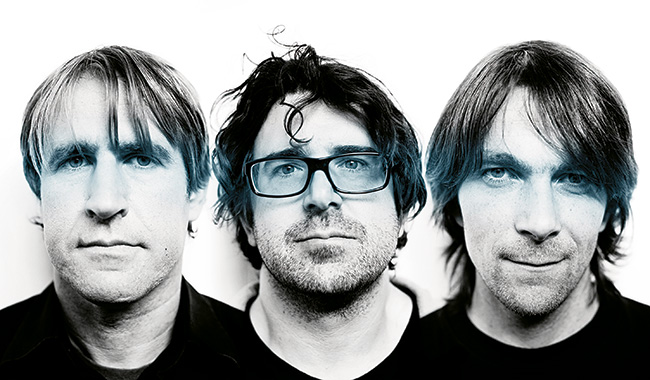
Sebadoh: The indie rock warhorse’s new Defend Yourself

Image

With long-serving US indie-rock outfit Sebadoh, what you see—and hear—is what you get.

“I always write from a very direct place,” offers frontman Lou Barlow from his home in Los Angeles, “which is good, but bad in some ways, because classic songwriting is about putting yourself in characters. With Sebadoh I write in a way that literally documents what’s going on in my life.”

Early Sebadoh songs famously took up Barlow’s expulsion by leader J. Mascis from Massachusetts band Dinosaur Jr. On their new album, Defend Yourself, the confessional atmosphere is even more personal and painful. “In the last year I left my wife,” Barlow says simply. “We’d been married for 17 years and together for 25 years. I left her during the recording of the record. So that informed a few of the songs.”

Where Barlow played the foil to Mascis in Dinosaur Jr., with Sebadoh, it’s all Barlow and co-leader Eric Gaffney. The pair formed the band in 1986, later filling out the lineup with drummer Jason Loewenstein.

Barlow and Gaffney’s songs have a less choked atmosphere than Mascis’s, but they remain quintessentially indie rock in flavor. Barely tuneful vocals are mumbled under grinding guitars—the ability to emote, rather than play a solo or pen a clever song, is the goal.

After releasing a few of lo-fi indie rock’s more influential albums (Weed Forestin’, Bakesale) in the late ’80s and ’90s, Sebadoh (a nonsense word coined by Barlow) went quiescent for a while. Barlow mended fences with Mascis for the 2005 Dinosaur Jr. reunion, and Gaffney had his solo project.

But Barlow and Gaffney went out on tour together again in 2007, even visiting Japan a few years later for a gig at O-West in Shibuya. The groundwork was set for their first recording in 14 years.

“We just finally found some time to do a new album,” Barlow explains. “We’ve had some really great tours, but it wasn’t realistic for the touring band to record for various reasons. Then Bob [current drummer Bob D’Amico] joined Sebadoh in 2010, and that went really well. So we made some definite plans. Jason and Bob flew out to LA and we got together in my practice space and recorded.”

The three tracked Defend Yourself without a producer, and the results are loose and lo-fi—yet surprisingly energetic for a bunch of middle-aged guys. “The last record we did in a studio and there was a lot of pressure and money involved,” Barlow relates. “What we learned was, if we were going to make another record and have a good time doing it, we wouldn’t get involved in any of that.”

At this stage in life, Barlow is unconcerned about staking out any new musical ground. “So much of what is considered modern music is actually regurgitated,” he believes. “I don’t think rock has progressed in any real way for a very long time—I don’t think that’s a bad thing. I’m just saying the most natural thing is to just write some songs and play them, and not make a conscious effort to evolve in any way or make anything timely.”

The name for the album came after the realization that three songs had the word “defend” in them. “A lot of our songwriting has been about understanding other people, but at some point you have to consider your own emotional wellbeing,” Barlow affirms. “Rather than always understand someone else, I had to go, ‘Well this is how I feel.’ There’s a double meaning: literally ‘defend yourself,’ but also to send the message to someone else that I’m not taking care of you any longer. It’s harsh, but it’s my life and I only have one of them.”

Showing archetypal indie rock lack of self-esteem, Barlow is sanguine that few people will actually relate the lyrics to events in his own life. “I’ve always felt my life doesn’t really matter that much and that no one is listening when I expose something,” he says. “I feel really anonymous when I do it. Even in my personal life, when I write for people, rarely do they see themselves in the songs. I take the view that the more honest I am in writing about myself, people will take that and apply it in their own lives.”

This goes for Barlow’s own experience of music. “When I hear a classic, great, incredibly personal song, I am not thinking literally about the musician who wrote it—I’m applying it to myself,” he says. “And I write my own songs with the naïve hope that other people are doing the same thing.”

Metropolis, Nov 21, 2013

Damo Suzuki: An improvised life

1022-JB-damosuzuki

The gyaku yunyu (reverse import) phenomenon is a familiar route for Japanese artists like The Boredoms, who remained obscure until stateside recognition brought them to the attention of a wider audience at home.

But Japan also has a coterie of artists who go abroad never to return. Counterculture hero and former vocalist for Krautrock visionaries Can, Damo Suzuki has been overseas over four decades.

“Honestly, I was just a hippy traveling with my rucksack and guitar,” Suzuki says about leaving Japan in the late 60s on a ship headed for Russia with only twenty-thousand yen to his name. Yearning for wider horizons of which he’d caught a glimpse growing up next to a US military base, a teenage Suzuki had no inkling he’d end up a counterculture icon.

But he was clearly already one of Japan’s proverbial nails that stand out. “The meaning of travel was different back then,” he says from his longtime home in Cologne, Germany. “When I left Japan I thought maybe I would never come back.”

Like for YMO star Ryuichi Sakamoto, whose years in New York have given him the distance to pillory Japan’s “nuclear village,” Suzuki’s decades abroad have given him a different perspective than most domestically based Japanese musicians. “If you are abroad you can see your country from another perspective, and are much more critical,” he says. “I can now see Japan clearly, and it’s not a place I want to live.”

Nevertheless, Suzuki returns to Japan on a frequent basis—often to perform with musicians a generation or two younger than him—and calls Tokyo’s current experimental music scene “fantastic.” He’ll be back next week to “curate” an event for Red Bull—the caffeinated beverage maker that targets young urbanites through its Red Bull Music Academy events.

Still a bearded, idealistic hippy, if wizened and transformed by his years abroad and battle with cancer, Suzuki will stage an expanded edition of his Damo Suzuki’s Network improvisational happenings.

With Red Bull’s backing, the event will see Suzuki lead a group of 25 musicians in a giant improvisation to the 1927 silent film Metropolis. Among the noted players to appear will be noise music giant Keiji Haino and Omar Rodríguez-López of Mars Volta fame. “The event will be improvised,” Suzuki tells Metropolis. “I might give some simple directions for the flow, but there will be no rehearsing.”

Suzuki tours the world creating instant musical happenings. “I travel from place to place and improvise with local musicians I’ve never met before. There’s always a good energy, because I work with open-minded people who like to do this,” he explains. “Improvisation is the best way to share energy with the audience, because no knows what will happen. Music is not an answer, it’s always a process and question. Like Laotse said, the way is the goal.”

For Suzuki, improvisation is more than a method to generate an artistic experience—it’s a means to live life to its fullest. “If you travel with a plan then you concentrate only on famous buildings or restaurants,” he notes, “but if you don’t have a plan you can have a much more creative experience.”

“If you lay in a coma once and survive, then you have another philosophy,” concludes Suzuki. “It’s very special. I had a blood transfusion and survived, so I feel every day is important.”

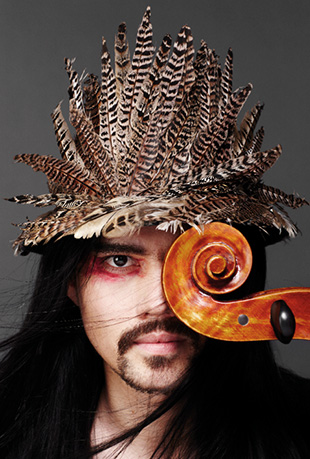
Benjamin Skepper: Aussie-Japanese musician’s postmodern soundscapes

Image

Avant-garde cellist, pianist, sound designer, fashion icon, and now cultural ambassador. Musician Ben Skepper is an artist of many hats (literally), among them being a bicultural Australian raised Melbourne by a Japanese mother and Aussie father who sometimes inhabits Tokyo. Metropolis heard from Skepper about his new album of field recordings, and his upcoming cultural mission to Russia.

Why did you decide to base your new album around field recordings?

In The Field is my fourth album, however, I present a different perspective on my work as a sound artist. This album is not instrumental, but rather an exploration of different sounds recorded around the world. Boiler rooms of a naval ships, Rom gypsy weddings, chanting in Roman Cathedrals, street life in Paris, environmental sounds from the forest in Australia, temple sounds in Kyoto, there are many different sound bites that I have captured. Back in recording studio, I separated all the files by country and then set about remixing field recordings into a multi-track recording. Italy, France, Turkey, Japan and Australia feature on this album, and each sound composition is designed as a “sound trip” into my sonic view of the landscapes of that country during my travels between 2006-2012. I hope that the sounds trigger visual images in the listener.

How do you incorporate the recordings with your cello and piano performances?

The field recordings form part of the live performance, interspersed between live instrumental compositions, and sometimes blurring into them. It is like a DJ mixing two tracks together, one is the live sound the other is the sounds of the field recordings.

What did you learn about yourself and your travels in making the album?

When we travel, we tend to capture a memory of a place or space on our iPhone. I see the world through sound, and while I love photography, to capture sounds from the places where I travel brings me back into that time space, triggers a memory. I rarely leave home without my sound recorder!

Tell us about a few of the more intriguing field recordings you made.

On the Turkish recording, when I was walking around Istanbul with my dear friend Aysu, we were suddenly invited into a Rom gypsy wedding party. People are very much scared of the Rom as they are often represented as thieves and criminals, however, we seized on this opportunity to join the fun, and I took a little recording of the live band and background chatter. It was a fantastic evening! The Italian field recording features many sounds taken on 11 March 2011, the day of the Tohoku disaster when I was supposed to fly back from Rome, but did not due to the disaster. That night I found myself on the Spanish Steps, in prayer, that friends, family and all in Japan would be safe. I captured a number of field recordings on this day as a memory of what happened even though I was outside Japan.

Tell us about your role as an Australian cultural emissary to Russia.

In July this year, I had my first tour of Russia. Alongside my work as an artist, I was also sent on a mission from the City of Melbourne to the City of St Petersburg with the intention of developing international intercultural exchange and to research the artistic landscape more generally. I met with some of the most prestigious Russian Public Arts Institutions, one of which was the State Conservatory of Music. I have now been invited back for a fellowship next year, which I am extremely excited about. I have always had a deep respect for the cultural history of Russia, and I now possess the chance to become part of its cultural fabric. Next year Melbourne and St Petersburg celebrate 25 years of sister city relations, and I have curatorial and collaborative performance plans in the pipeline. I intend to share my experiences as an artist with Russia, and to introduce Russian art and artists to the rest of the world. It is a big dream, which is coming into fruition.

Metropolis, Oct 15, 2013

The Trojans: Ska-ing their way into history

Image

Singer, bandleader, DJ, impresario and fashionable bloke about town Gaz Mayall says he’s at the “hub of a musical and cultural wheel”—and he means it.

When Metropolis catches him by phone on a sunny late summer day at a London park, several entertainment business friends pass by, and for good measure are put on the phone to say “hallo.” Gaz and his friends are still basking in the afterglow of the Notting Hill Carnival, London’s annual freewheeling celebration of Afro-Caribbean culture.

Mayall, the 55-year-old son of blues legend John Mayall, has run a stage at the festival for years. “For the last two years Mick Jones has come up and sung ‘Should I Stay Or Should I Go,’” he drops casually. “I’m the only guy who still has live bands. To get funding we go to the arts council, because it costs a fortune to put it on. We build a huge stage, a DJ tower and take over a whole block.”

Needless to say, Mayall’s own ska outfit The Trojans play his Gaz’s Rockin’ Blues stage, an outdoor version of the Gaz’s Rockin’ Blues night he stages every Thursday night in London. At 33 years and counting, the event is London’s longest running one-nighter.

While Gaz’s musical education came at the hands of his father, his musical career emerged from a different angle. “I had a clothes stall in the ‘70s in Kensington Market,” he explains, “and at that time my shop was quite big. I would bring a load of records, we’d be listening to ska, old rock, R&B… We had a meeting of kids’ tribes—punks, teddies, skinheads—and one day in ’79 all of a sudden all you could hear was ska up and down the country. Everybody started buying second hand suits and looking really sharp and listening to ska, and I was right in the center of it in my shop. All the bands—Madness, The Specials—would come to hang out.”

Mayall launched his club night in 1980, and then followed it up with his own band in 1986. “Ska was about being an international music form—not just American music, but about our homegrown mish-mash, which we called ska,” he says of his motive for creating The Trojans.

“When I started my own band I wanted to push the border a bit further,” he continues. “So I introduced Celtic music to the mix, with bagpipes, whistles and fiddles, and showed how you can have archaic Celtic music—even Japanese or Russian music—and mix that into Afro-Caribbean beats. I try to incorporate all this music that I love with a passion, because at the end of the day all music is a fusion of something that came before it. It’s all about bringing together people from different tribes, and I’ve always wanted to be right at the hub of that musical wheel.”

With Gaz’s various endeavors keeping him busy (and hard to reach), and the band’s lineup shifting due to events both happy (children) and sad (suicide), The Trojans are an occasional affair. It’s been five years since they last toured Japan and 15 since their last album.

Among the 18 musicians on Smash It! (available on disc from Japan’s Ska in World Records), are everyone from 20-year-old featured singer Zoe Devlin to vintage Jamaican trumpeter Eddie “Tan Tan” Thornton to Japanese sax player Megumi. Mayall jokes that the band is something of a Buena Vista Social Club of UK ska.

“I went back to the basics with this one,” he says of the disc. “There’s rocksteady, calypso, mento, and instruments like the bagpipes that you’d only hear with the Trojans. We take it back to the basic Trojans story, which is about a load of people coming together who represent the multiracial backbone of London. We started at a pivotal turning point in London society where that really began, around ’79-’80.”

The connection between Gaz and Japan isn’t limited to Megumi and the vinyl release of Smash It! The Trojans have long considered Japan a second home. “The first time I’d ever been to Japan, I’d just had three wisdom teeth removed and my first live-in girlfriend had left me,” Gaz recalls. “The phone rang, and it was Koichi Hanafusa of Japanese promoter Smash, and he said, ‘Do you want to come to Japan?’”

Thus was launched a bond between Mayall and Smash that has deepened over time. Regulars at Smash’s Fuji Rock Festival may have noticed a tall, gangly man at the entrance to the Palace of Wonder stage—Gaz’s brother Jason.

“Jason was the tour manager for the Trojans in the ’80s and I introduced him to Masahiro Hidaka,” Gaz says of the head of Smash. “They got on and Jason ended up establishing Smash’s London office. I haven’t done them all but Jason has done every one.”

Metropolis, Sep 26, 2013

DJ Emma: Up close with Tokyo’s hardiest house DJ

Going back to the heady early days of Tokyo’s house music scene and fantabulous clubs like Gold, DJ Emma was there. Two decades on and he’s still there, behind the decks at Tokyo’s biggest discotheques, ministering the gospel of classic house music to the faithful. Metropolis tracked Emma down for a quick Q&A on the occasion of his latest dance remix album for Daikanyama club Air.

Metropolis, Sep 5, 2013

Dj-Emma-Fix-e1378363490758

Onda Vaga: The Argentinian quintet reprise their Fuji Rock conquest

With an unsettling eight shows over three days at Fuji Rock 2012, Argentina’s Onda Vaga were the universally acclaimed masters of the event’s small stages. Now they return to Japan to tour their new disc, Magma Elemental. We caught up with singer-songwriter Marcelo Blanco ahead of the quintet’s biggest gig yet in their native Buenos Aires.

Metropolis, Aug 29, 2013

Image

Gamarjobat: Mime duo jacks Tokyo

Japanese acts that first find success abroad often then have to convince domestic audiences to reimport them in a bit of legerdemain called gyakuyunyu. Something of a fallacy exists that overseas acclaim immediately translates to success here as well. “We are originally from Tokyo, but ended up performing overseas a lot,” Ketch! (the red-mohawked one) says about comic mime duo Gamarjobat’s trajectory since their discovery at Scotland’s Edinburgh Festival. “We tour Japan every year but we hadn’t done Tokyo much, so this time we decided to devote ourselves to the capital.”

Metropolis, Aug 2, 2013

Image