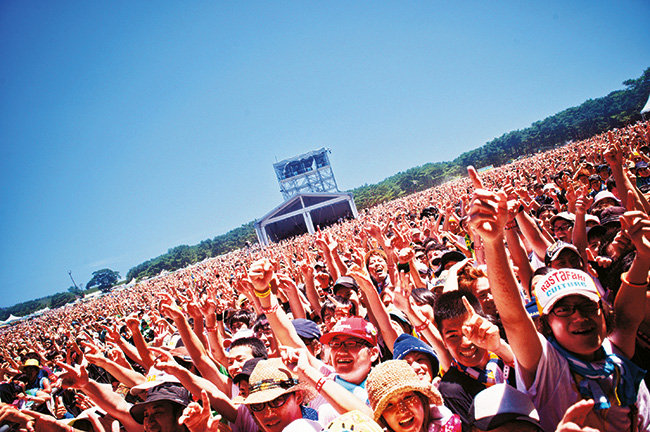
Summer Festival Guide ’13 Posted on July 18, 2013 by dangrunebaum From analog headbangers to techno raves, Japan’s music fests have everything under the sun Metropolis, Jun 20, 2013
Music & Stage: A Decade of Decadence Posted on June 7, 2013 by dangrunebaum From vaginas and gaijin J-rap to rock festivals and J-pop’s demise Metropolis, May 24, 2013
Gaijin Evolution: From seekers and slackers to strivers and thrivers Posted on May 30, 2013 by dangrunebaum Rewind two decades to the first issue of Metropolis in 1993. Japan was a juggernaut—about to roll to Number One on an unstoppable export machine. My time here tracks this magazine’s existence, so for the 1000th issue let me hazard a few thoughts about the changes in the Western population that constitutes our readership… Metropolis “Last Word,” May 23, 2013
Takako Minekawa & Dustin Wong: Indietronic pair’s “Party on a Floating Cake” Posted on April 30, 2013 by dangrunebaum Some matches are made in heaven; some don’t even bother waiting to get there. Indietronic pair Takako Minekawa and Dustin Wong’s new album Toropical Circle sounds as if it were made somewhere near the gates to heaven—somewhere, if you will, at a “Party On a Floating Cake.” Metropolis, Apr 26, 2013
808 State: The seminal electronic act reveals a political side to rave culture Posted on April 30, 2013 by dangrunebaum “Guitar bands were out. Using the new technology was a stance for change, being armed with a sampler was very much about starting a new page. We had more in common with Detroit than London. Joining an internationalism of the dance floor was a rejection of colloquialism that had chained us.” – Graham Massey Metropolis, Apr 12, 2013
Moon Duo: Ripley and Sanae lob their spaced out sounds at Japan Posted on March 23, 2013 by dangrunebaum Take the Eastern psychedelia of a late-era George Harrison sitar solo and the fuzzbox transcendence of strung-out Velvet Underground. Set it to some purposefully tinny rhythm box beats and you’re getting close to the sound of Oregon pair Moon Duo. Metropolis, Mar 18, 2013
Alabama Shakes: Brittany Howard’s post-racial rock Posted on January 18, 2013 by dangrunebaum Brittany Howard’s vocals are imbued with strains of strong soul divas from the black Marva Whitney to the white Janis Joplin. The singer—herself a blend of black and white—takes a post-racial view of music. “It could be black music or white music. Anything with a soul we’re interested in,” she affirms. “Elvis sang and played black music—that’s where rock came from. But I don’t know if our sound is a black-music thing, I think it’s just a music thing.” Metropolis, Jan 17, 2013
Is Japan losing its cool? Posted on December 13, 2012 by dangrunebaum Manga, anime, J-pop – once it was all about Japan. But the country’s efforts to channel its ‘cool’ as part of a global soft power strategy may need a revamp amid intense competition from Korea. Christian Science Monitor, Dec 8, 2012
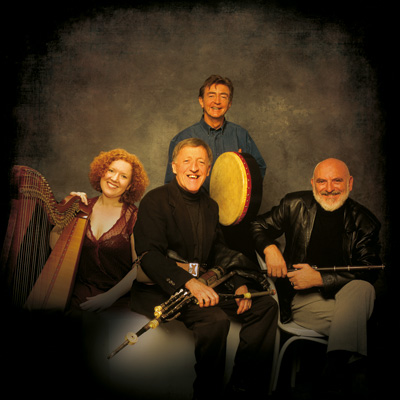
The Chieftains: 50 years of avoiding politics and religion Posted on November 16, 2012 by dangrunebaum In a career that overlapped with the worst of Ireland’s “Troubles,” the Chieftains were also uncompromising in their refusal to get drawn into Catholic-Protestant conflict. “I always kept away from politics and religion,” bandleader Paddy Moloney says. “As a result we were probably the only group of our kind to play a mixed audience in Belfast. One of the senior unionist guys was one of our biggest fans and when we did our 25 years celebration he came down and spoke. He said this and that, but that music is music.” Metropolis, Nov 5, 2012
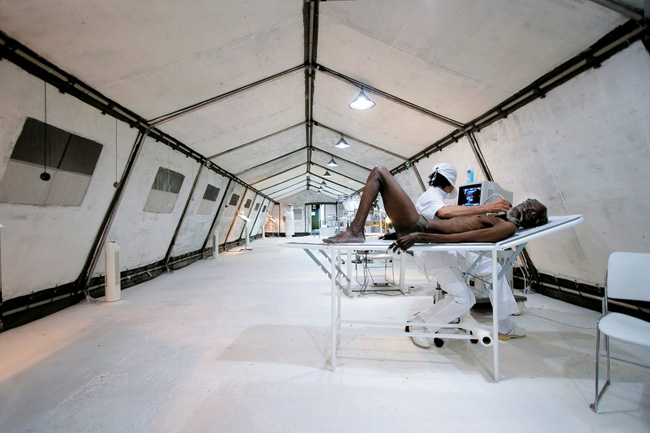
Festival/Tokyo 2012: Japan’s marquee theater fest defends free speech post-3/11 Posted on October 14, 2012 by dangrunebaum “In recent Japanese media… we can see a critical and dangerous increase in one-sided denunciations of risk-taking artists and art,” says program director Chiaki Soma in her notes for F/T12. To combat what she sees as a “nonchalant oppression,” Soma cobbled together a hard-hitting lineup of political theater for the fest’s fifth edition. Metropolis, Oct 11, 2012





 tokyo flow