
It Came From Japan: Podcast brings the ‘creamiest’ J-indies to the world

1049-AE-Japanbeat-ICFJ-Daniel-Robson-and-Asuka-Eiki

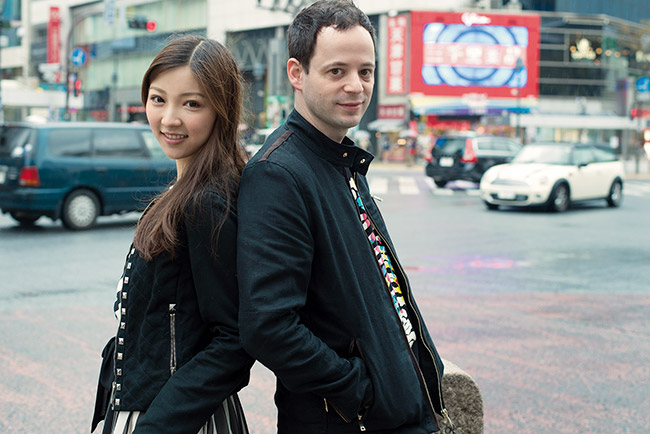
There is no lack of Japanese tunes on the web, but little of it is presented with the authority wielded by It Came From Japan. English journalist Daniel Robson and his sidekick Asuka Eiki not only offer a Japanese music-crazed perspective and inside details on what’s going on in the music scene—they also produce the only podcast that plays all-Japanese music with permission from the rights holders. We heard from Robson about interviewing the likes of Buffalo Daughter, and which bands he expects to break big in 2014.

When and why did you start ICFJ?

ICFJ started out in 2006 as a tour agency taking Japanese bands to the U.K. and later the U.S. The podcast was originally a freebie for our audience to keep them wet between tours. It turns out—who knew?—that simply submitting a song to be played on a podcast is a lot less commitment for the artists than flying halfway across the world for a show, so we’re able to expose more bands on the podcast than we can with tours. Also, as a journalist who usually describes music in text form, I love that on a podcast the songs can speak for themselves.

Tell us how you became hopelessly addicted to J-indies.

I grew up with Western punk and rock music. Then in the ’90s I retrieved a discarded Shonen Knife CD (Let’s Knife) from a friend’s dustbin and fell madly in love. By the time I became a music journalist in London I was already hooked on everything from Melt-Banana to Puffy and would interview artists like Polysics and Utada Hikaru for U.K. publications. I moved here in 2006, shortly after the first ICFJ U.K. tour, to drink from the source. Nowadays, the indie scene keeps on throwing up new surprises, while most modern mainstream J-pop (AKB48 etc.) just makes me want to throw up.

How do you go about choosing bands to present?

Everything we play is with permission from the rights holders. Some of the major labels in Japan will allow usage on podcasts on a case-by-case [basis], but independent labels make up the majority of what we play. Within that, I mostly pick songs by artists that have a timely release or overseas tour. I program the show from a journalistic perspective but heavily influenced by my own personal taste, which luckily is all over the place, so we cover a wide range: rock, punk, pop, electronic, rap and all the glorious crossovers that Japanese musicians excel at. My cohost Asuka Eiki picks some of the songs, too, and although she’s a model she’s a total metalhead. As for the interviews, I choose whatever artist is most interesting that month, with a particular emphasis on artists who will be of interest to our mostly Western listeners. And of course when ICFJ has an overseas tour coming up we feature those artists, too—all of whom are excellent, if I do say so myself.

Name three memorable ICFJ moments.

I recently interviewed the members of Cibo Matto for the show, which was a big deal because they just re-formed to release their first album in 15 years and it was miraculously not rubbish. Some other great interview moments have included observing the older/younger sibling dynamic between J-klezma sisters Charan Po Rantan, hearing the perspective of worldly Japanese artists such as Argentina-raised drummer-singer Shishido Kavka and an emotional John Lydon appearing on our post-tsunami fundraising podcast. In addition to on-air moments, I’m proud to have persuaded the Japanese government to spend money exporting contemporary artists overseas, with the Japan Rising showcase at The Great Escape festival in Brighton, England, on May 10—that one features Buffalo Daughter, Mayu Wakisaka and TarO&JirO and is going to be a real thrill.

What stands out among the feedback to ICFJ?

We get such a wide range of feedback via Twitter and Facebook that it’s hard to pinpoint specific trends, but I’m pretty sure the majority of our listeners—who are split almost equally across the U.K., North America and Japan—hate AKB48 as much as I do, which means they’re a good crowd.

How are J-indies faring worldwide?

The Japanese artists with a following overseas are not necessarily the ones who are the most popular here—overseas activity counts for a lot, which gives independent artists an advantage. And of course the rise of Twitter has allowed artists to escape Japan’s payola-driven mainstream media and reach out to the world.

Tell us which Japanese act you think is most likely to break worldwide this year and why.

I’d love to see hip-hop duo Charisma.com, hardcore band Mamadrive, pop drummer-singer Shishido Kavka and others succeed overseas, though as with any Japanese artist they’ll have to want it, because the world won’t come to them. And of course, the artists playing at Japan Rising all have a good shot, since they were selected not by us but by the bookers of The Great Escape festival, who know the U.K. market better than anyone.

Name three indispensable Japanese music podcasts and websites.

I love Nihongaku Radio, which is a podcast of Japanese music recorded in Texas by a guy who lived here for a while, Jonathan McNamara. He works in radio, so the quality is great, and he has a very specific taste for Japanese rock. Most of the other Japanese music podcasts I’ve heard have been awful, but they serve as a good example of how not to do it. Basically, we try to keep the editorial and audio quality as high as possible, to mess around but keep it tight, and to show our passion for the music while maintaining a bit of journalistic perspective so it’s not just a fanboy gush-fest.

Mio Soul: The New York-based Japanese artist’s Subliminal Melody

mio-soul-e1398328433268

The Japanese have long headed to New York to imbibe jazz, R&B, house and hip-hop at the source. A few hardy individuals even stay on to forge their careers amid the competitive pressures of the New York music scene. Metropolis heard from young singer and producer Mio Soul about the ups and downs of being an independent Japanese artist in NYC, and what it feels like to be called “the Japanese Alicia Keys.”

How did you come to be making music in NYC?

I am a singer-songwriter and came to New York to sing a few years ago. I was told that I should start making beats since I know how to play the piano, and I’d also been looking for producers to work with but couldn’t find one. So I started producing music. I started off using Reason 5 and then went to DJ school at Dubspot in NYC where I studied Ableton live software. That experience really changed my life. Not only did I learn skills but I also had the chance to be around very talented people.

How does living in NYC shape your music as compared to living in Japan?

Initially I thought I would be more inspired here in NYC, but now I honestly think I can make music wherever I am. But I actually made my way here to NYC because I needed to know the roots of the music I liked—I had to speak the language, breathe the air and feel the music.

Why did you decide to go the production route this time?

This happens to be another tool to express myself as Mio Soul. I really wanted to share another new world that I created with people.

You began Subliminal Melody as a 30-minute beat making challenge at Starbucks every week for 1 year. How important was caffeine to the process?

Hahaha! Caffeine? I honestly don’t know. I don’t think I get too excited. I always like to order a tall hot cafe mocha and that makes me feel chill. I came up with the project shortly after the Dubspot course because I wanted to keep studying and to make as many tracks as possible. At the same time, I thought it was a good idea because I started reaching people via Soundcloud. At the beginning, there were only 3 to 6 people listening to the tracks. Then several weeks later I saw that about 30 people had started listening to the tracks and that became hundreds per week. That was simply amazing and I appreciated all the feedback too. Those tracks were not perfect but I kept going.

Tell us about the creation of three songs on the album.

Right before I start creating, I close my eyes. I don’t even know what kind of beats I want to make… is it R&B, hip-hop, house or even EDM or techno? With “My Telephone Number” I was in the mood for something in a house/tech-house style. It was quick programming the house drums and then the next 5 minutes was me focusing on selecting the right instruments and effects. It’s like a puzzle process to put the right elements in the right place… The creative process of “Blind 77” was very interesting. I thought I was never going to finish it actually. At the beginning everything seemed separate and I didn’t know what I was doing. That is where this title comes from… When I started making “Boost Me Up” the first draft that I came up with was very light. I remember around this same time Justin Timberlake’s new album had just come out. The JT influence made me shift to a heavier but also uplifting vibe. I looked at my initial direction with the synths and bass I used and decided to change the whole melody. Suddenly the vibe completely changed and you have “Boost Me Up.” Thank you JT!

How does it feel to be called the “Japanese Alicia Keys”?

That is very honorable. I actually I don’t think I sound like her but as a passionate singer and emotional electronic dance music producer (I call my genre EEDM sometimes lol), maybe we have that in common.

How difficult is it for a Japanese R&B artist to connect with a North American audience and how do you try to reach people there?

First of all, we gotta speak the language so that we can communicate. When it comes to singing, especially, so that people can be really attached to the feeling and emotion of the lyrics. Just the overall music and sound isn’t enough. Vibes, passion and soul are important too. That is the reason why I like to make tracks too—to express my soul and vibe. With these two aspects, I was able to reach many different kinds of people here in the USA and also in Asia as well as Japan. Recently I feel that I could connect with Japanese people more. If I perform in Japan, I think I should perform in both languages.

Why do you think US R&B and rap haven’t been more successful in Japan?

I honestly don’t think that those genres are not not really successful in Japan. They may not be the mainstream like J-pop but there are a lot of core fans. I think the fans love those genres but I am not sure if many are really into electronic music just yet. What is really cool to me now is this new style of R&B. It is like a fusion of R&B and electronic music. That is where my vibe is currently.

Where do you see your Mio Soul project heading?

My first EP In My Skin was the first project here in the USA. I created music that showed the roots of music I love and wrote songs reflecting my important experiences in life. I also produced a few of the songs on that EP and I actually rap and sing in Japanese. In My Skin was the raw me. My current instrumental project is me evolving as an artist to show my diversity as a creator. This is definitely a process of rebuilding myself as Mio Soul, constantly asking myself… Who am I? What is my message? These two projects will lead you all to my next project—my second vocal EP, which I will produce. I will share more of my own style and identity with more messages from life and what I have been through. Life should be happy all the time and I wish I was smiling all the time, however life is tough sometimes. Sometimes you gotta stop and figure it out. And sometimes you gotta just hold on. My music is very happy but also very emotional too. I always want my honesty to be reflected in what I am creating.

Metropolis, Apr 24, 2014

Hotei: Rock icon won’t rest on Japan successes

1037-AE-Music-Hotei-Tomoyasu20It’s the morning after his long-anticipated New York gig, and Tomoyasu Hotei seems relaxed in a lounge at a Midtown hotel.

Though he’s moved to London and is leaping into international markets, the guitarist has reason to feel self-assured. He’s coming off two sold-out headlining gigs in London and New York, which have effectively served as his worldwide coming-out party.

“I think I’m the man to do the Olympics,” Hotei answers confidently when asked what kind of music would work for the 2020 Tokyo opening ceremony. “The Olympics should begin with something powerful and Oriental-feeling,” the lanky rocker adds. “Of course they could use Hatsune Miku—it’s great technology—but it’s a bit cold and unemotional.”

Hotei is not the first Japanese cultural figure to express alarm about the rush to embrace virtual idols and the like under the banner of Cool Japan. “I’m a bit worried,” he confesses. “It’s all a bit too cute. It’s great for what it is, but Japanese culture is deeper than that.”

Hotei emerged in the ’80s as the explosive guitarist for multi-platimum group Boøwy at a time when Japan’s charts had more room for muscular rock ‘n’ roll. He’s a guitar hero of the old school, and at New York’s Highline Ballroom Hotei wields his “axe” like he’s got some serious wood-chopping to do, throttling the neck to release bent high notes and windmilling the strings to underline the occasional power chord.

Surrounding Hotei is a crack international cast of supporting musicians. The music draws on his million-selling solo career, but crests on the song for which Hotei is best known abroad—“Battle Without Honor Or Humanity” from the Kill Bill: Vol. 1 soundtrack.

“I originally wrote the music for a Japanese yakuza movie for which I was music director,” he explains. “When the offer came, everyone said you shouldn’t do a yakuza movie because of the bad associations. But the director was good and I felt it would work with my music. Quentin Tarentino loved that movie and contacted my management. I also worked with Terry Gilliam on Fear and Loathing in Las Vegas. I’m a lucky guy.”

With his taste for international collaboration whetted, Hotei’s move abroad has been incubating for a while. But it’s the flowering, it seems, of a seed planted in his mind by his Korean father. “My dad would come to my room and spin the globe,” he recalls about his childhood in Gunma. “He’d say, ‘Hey Tomochan, the world is big. You’re now here, but in the future you should see the whole world.’ So I dreamed of using my guitar as a passport to see the planet.”

Living abroad has given Hotei perspectives on how to best present Japanese culture to a Western audience. “You can find a lot of strange sushi here or in London, for example, but that is sushi for the world. So we should balance what Oriental means outside of Japan with what it means inside of Japan. Now I see this more clearly.”

Hotei deliberately chose Japanese musicians for his international band in order to retain an Eastern flavor. “I don’t play shamisen, but I feel deep inside I have something traditionally Japanese. For example, Kill Bill, somehow it came out Oriental even though I didn’t intend it that way. So abroad, I feel more conscious of my identity.”

Along with artists such as Yoko Ono and Ryuichi Sakamoto (who is in the audience at Hotei’s show) in New York, and Damo Suzuki in Berlin, Hotei is part a growing coterie of Japanese rock elder statesmen who choose to live abroad.

It’s not that there aren’t young Japanese bands based overseas right now, but they come from a generation of Japanese that didn’t experience rock as a subversive Western import, and perhaps don’t find it to be as much of a revelation.

Hotei grew up on David Bowie and Talking Heads, and bemoans the lack of interest many young Japanese musicians seem to have in Western rock.  “Japan has the largest CD market in the world, so most artists are satisfied with the domestic market. I want to say to young Japanese artists that they need to challenge themselves more. I think they are too satisfied.”

Hotei grants that touring overseas can be hard. “Even major Japanese artists have told me it’s not worth the effort, but I think it’s important to experience different markets and scenes,” he says. “And it’s interesting to me to see how diverse audiences receive my music.”

Hotei’s current London plans are simply have fun and gig. And he does concede the benefits of Japanese organization when it comes to doing shows. But for now, he wouldn’t be any other place than England. “Everything is on time and perfect in Tokyo,” Hotei admits. “Overseas can be frustrating—but I’m really enjoying life in London.”

Metropolis, Feb  6, 2014


The Lumineers: Wesley Schultz‘s sushi-flavored work ethic

1035-MU-The-LumineersIt’s been a year of superlatives for Denver folk-rock outfit The Lumineers since “Ho Hey” went to number one on the back of one of the decade’s most memorable choruses. Yet when Metropolis reaches frontman Wesley Schultz on tour in Florida, they’re coming off another high.

“We sold out two nights at Red Rocks with the Denver Symphony Orchestra, which was just incredible—it was distracting how beautiful it was,” he explains in measured cadences over the phone. “It was the first time we’ve had the chance to play with people of that caliber.”

Schultz says the quintet’s planning for their first symphonic collaboration went smoothly. “Tom Hagerman, who’s in this band Devotchka, did the score. We make pretty minimal music, so there was a lot of room to add more sound. Some of the songs we’d already envisioned with strings, so the choices pretty much made themselves.”

Along with outfits like Mumford and Sons, The Lumineers are spearheading a new chapter in the singer-songwriter tradition.

Founded by Schultz and childhood friend Jeremiah Fraites in New Jersey in the mid-2000s, the group weds heartfelt lyrics to carefully wrought acoustic guitar music, leavened by the cello, mandolin and bass of three newer members. “Jer and I, we’ve been writing songs for eight-plus years together,” Schultz says, eager to show the band is more than simply a 100-million YouTube view wonder. “That experience made me able to appreciate this—and the years of working on our craft in the shadows I hope helped us to make a complete record instead of just one great song.”

Still, the shock and delight clearly continue to reverberate. “Three years ago, my brother and I were home for Christmas,” Schultz remembers, “and he said, ‘Did you see that “Ho Hey” song has 3,000 hits?’ I thought he was joking, but it kept growing and growing. The number gets so big it’s difficult to wrap your head around it—you realize it as you travel to different cities and more people recognize you. So I’m blown away and thankful that song got our foot in the door with a lot of people.”

Rather than musical influences, Schultz credits people outside of music for helping him realize his musical vision and then stay focused enough not to get carried away by the hype over “Ho Hey.” “There have been a few figures in my life—one worked construction, one was a butcher and the other a sushi guy—and they all taught me so much more about music than most musicians ever did about how to conduct yourself,” he says.

The “sushi guy” was the owner of the restaurant Schultz and Fraites worked at in Denver after relocating from New Jersey. “It’s owned by three Japanese brothers, and they taught me what it means to be a hard worker,” Schultz says. “Making sushi at a high level taught me a lot about how to approach our band. It’s about that unrelenting commitment—being really intentional about things and punching a clock helped me far more than knowing the right records or something.”

Which of course makes it a given that the singer, who spent three months in China but has never been to Japan, is excited about The Lumineers’ first visit here. In the meantime, there’s a European tour, and a track on the new Hunger Games movie. “It’s called ‘Gale Song,’” Schultz informs, “but we’re not allowed to play it until the movie comes out.”

Like all Lumineers’ efforts, the song’s simplicity shrouds the elaborate process that brought it into being. “Typically our songs are worked over a lot—we’ll record 20, 30 versions, playing with the tempo and instrumentation and adding verses and taking them out,” Schultz says. “We burn an idea down and then build it back up again ’til we’re satisfied.”

Metropolis, Jan 23, 2014

The Telephones: It may be 2014, but the Saitama group is laughing, crying, singing…and dancing like it’s 1999

Image

Poking relentless fun at Japan’s crassly commercial late 20th century pop culture against a backdrop of disco-infused postpunk, The Telephones have in eight years cut an increasingly large profile across the Japanese popscape. Metropolis talked to vocalist Akira Ishige about the Saitama band’s latest, Laugh, Cry, Sing… And Dance!!!, ahead of their Go Live Vol. 1 gig at Ex Theater Roppongi.

The first time Metropolis saw the Telephones was some years back at Chelsea Hotel in Shibuya. How has your sound grown?

These days we’re going for a more pop sound. Which is not to say out and out pop, but pop with an alternative flavor. We used to be more postpunk influenced.

What is the band’s backstory anyway?

We met at a live house in Saitama. My first thought was, can this really become a rock band? The members seemed too nice. I couldn’t believe it was going to work, but the first time we got in the studio it felt right.

Tell us about your first song…

We didn’t start with a cover but wrote an original right away. Our first track had the disco punk sound typical of our early days. We actually still play the song—it’s called “Used Skin” off our Japan album. We still have the same members. We fight like any other band, but no one’s quit yet. We just hash it out until everyone has come to terms with whatever differences there are between us.

Last summer you played your first Fuji Rock Festival. How was it?

It was a dream come true. We were pretty nervous but psyched. Fuji Rock is a dream for any Japanese band. You feel like a star playing alongside all those international acts—it’s completely different than your typical Tokyo live house.

The fans have been waiting all year—they really get into it…

Yeah, and the location is fantastic. We played the White Stage, which is beautiful and also has really good sound.

What are some other events to aim for?

It goes without saying that Glastonbury would be awesome and Coachella, too. Then there’s always the Fuji Rock Green stage.

Have you been abroad yet?

We’re going to Europe next month: France, Belgium, Switzerland and England. We’ll be playing with Polysics.

Tell us about your new album…

We’ve gone in a melodic, pop-oriented direction.

Was it a conscious choice?

It was more of a natural tendency than a calculated decision.

The song “It’s Alright To Dance” hits the nail on the head in light of the current police campaign against dance clubs…

It was inspired by Eurobeat but done in a Telephones style. We love that kitschy, Eurobeat sound.

The song title “90s Drama Life” is attention-catching…

It’s inspired by ’80s and ’90s electronic music, which is a huge influence on us. I go clubbing in Tokyo a lot and also DJ. I got into electronic music via the Manchester sound, beginning with bands like the Happy Mondays and New Order and then house and techno.

What Tokyo clubs do you like?

Ageha, WWW, Liquidroom are a few of my favorites. But I usually spin at smaller clubs in and around Shimokitazawa. I like to move between the live rock and electronic scenes, which have really been coming together anyway for the last seven or eight years.

Yeah, it almost seems like you can’t have a rock band without a DJ or synth/effects player these days…

Actually there are still a lot of purely guitar-oriented bands. They may not be trendy at the moment, but there are many Japanese punk and metal bands that wouldn’t think of having anything electronic in the lineup.

Tell us about a song you’re working on now…

We’re recording a new song right now. It’s got a ’90s dance music vibe. I think you’ll find it interesting—it’s quite funny.

Is humor important for you?

Yeah, we always try to inject some humor into our songs. We’re pretty serious about music, and maybe as individuals, but when we get together something happens and we tend to lose it.

Does humor make it easier to stick together as a band?

We’re serious when we need to be serious, but we’re also serious about being funny, too… if you get what I mean.

Who’s the goofiest band member?

It’s hard to say. Everybody is funny in his or her own way. But maybe our synth player Nobu is the most obviously goofy. His stage persona reminds me a bit of The Happy Monday’s “Bez” [notorious dancer Mark “Bez” Berry].

What does music mean to you?

Music has always been part of my life. It’s a release for me, whether listening to it or playing it. I started playing music in elementary school, and MTV was also a big influence. I was into hard rock and heavy metal even as a small child.

Metropolis, Jan 22, 2014

Takuya Kuroda: Winter Jazz Fest, Jan 11

Image
Photo by Jati Lindsay.

It’s eight on a warmish—for January—Friday night in New York City, and the line is dozens deep for a set by Japanese trumpeter Takuya Kuroda at this year’s tenth Winter Jazz Fest.

In a short decade, the event has become a fixture of New York’s music calendar, and tonight it’s something of a coming out party for Kuroda. The Kobe-born trumpeter is not only playing the sprawling festival on a Friday night at downtown club Groove, he’s also just  launched his debut album for legendary label Blue Note.

The aptly named Rising Son ripples with the 33-year-old Kuroda’s fluid style, and classic approach to chopsmanship. Best known until now as the trumpeter with nu soul vocalist Jose James, Kuroda is influenced in equal parts by the understated cool sounds of Miles Davis, and the more athletic, upbeat tones of Clifford Brown.

Rising Son bubbles with beats from the laidback fusion of Roy Davis’s “Everybody Loves the Sunshine,” to Afrofunk, and at Groove the band is all rhythm. While the group could showboat if it wanted to, the players remain focused on, well, the groove.

With Kuroda now on Blue Note, it’s only a matter of time before the New York-based player makes his mark on his native Japan. In the meantime, he’s boning up playing at events such as Winter Jazz Fest alongside the likes of Elliot Sharp, Vernon Reid, the Jazz Passengers, Marc Ribot and Roy Hargrove.

Metropolis, Jan 15, 2014

Los Lonely Boys: Garza bros deliver a “Texican rock” Revelation

Image

Somehow, the image of three Chicano brothers singing rootsy rock songs steeped in Christian ideas of family and faith, didn’t seem quite the natural fit for Club Quattro in trendy, materialistic Shibuya.

Yet there Henry, JoJo and Ringo Garza were, searing themselves into the audience’s consciousness in their first visit to Japan in 2012. “We always want to make sure our music is about being in the light,” JoJo says from the Los Lonely Boys’ San Angelo, Texas hometown, “by which I mean god being the ultimate source. It doesn’t mean if you don’t believe we don’t care for you; all it means is that’s how we live our lives.”

Not so long after a follow-up Fuji Rock appearance, their faith was severely tested. Singer and guitarist Henry broke his back at the beginning of 2013, falling off the stage during a concert in Los Angeles.

“It was a horrible, horrific accident, not only to the business, but most importantly to the family,” JoJo says. “It put our lives back in perspective. We got together as a family and are a lot closer again. It’s sad that it takes something catastrophic but sometimes that’s what it takes.”

Henry’s recovery has been two steps forward and one step back, but the band was able to complete their brand-new album, Revelation. “When the accident happened we were already working on the record, and I can remember Ringo and I were going into the studio without Henry trying to work through the parts we could, but it just didn’t feel right,” JoJo says. “We even played a gig without Henry, but decided that wasn’t going to happen again. It’s been one of the tougher years in our lives and I’m thankful we’ve had the opportunity to learn, because it could have been swept out completely from under our feet.”

Revelation sparkles with Los Lonely Boys’ “Texican rock ‘n’ roll,” their sublime blend of Latin rock, blues and Americana. It’s a style the brothers have been honing for a decade since they emerged out of Nashville, where they’d moved to break into music.

Willie Nelson, virtual personification of Americana, helped propel the brothers along by guiding their debut album, which saw the track “Heaven” go to number one. “Willie gave us a big push in the early stages of our career, and he’s treated us as his own family, and loved and respected us,” JoJo says. “He was also one of our dad’s biggest inspirations, as well as Waylon Jennings and Johnny Cash.”

Los Lonely Boys’ new single, “Blame It On Love,” encapsulates the band’s musical trajectory. Launching with simple acoustic guitar and mariachi accordions, the track segues into a rollicking country rock jaunt, climaxing with a sizzling Fender guitar solo, all topped off with the brothers’ crystalline harmonies.

“Dad taught us about Mexican-American cats that weren’t doing the traditional music, people like Santana, and earlier cats,” recalls JoJo. “He and his brothers were actually playing traditional music, but they would also step away from that to do country or rock. It’s something we’re really proud of, to know our own traditional music, but also be able to branch out into Americana.”

Music is the family business and the Garza brothers are handing it down to their own kids. “You can’t help what gets played on the radio and TV, and when the kids are out with the other youngsters, they want to blend in,” JoJo grants. “So my kids are aware of computer-based music and the computer controlling everyone’s voices, and that’s cool in its own right. But our music comes from raw wood with a few strings attached, and we feel it’s something that has to be passed on, and not only to our children, but to everyone’s kids.”

The Japan-edition of Revelation, as is customary, features a few bonus tracks in the form of a cover of Santana’s legendary “Oye Como Va” and a live recording of “Heaven” from that night at Club Quattro.

“I don’t know why they expect more tracks—it’s kind of weird to me—but ‘Oye Como Va’ we recorded a while back and they liked it and we were like, ‘Yeah, if you want to use it go ahead,’” JoJo explains. “Because at that time it was impossible for us to get back in the studio. But then when they used ‘Heaven,’ which was recorded in Shibuya, we were super happy about that.”

“We love Japan and we can’t wait to get over there again,” JoJo finishes. “I didn’t want to come back to America. The humbleness of the people, the courtesy… I just felt like that was where I belonged.”

Metropolis, Jan 8, 2014

Padmasana II: Asia expats head back to the chillout room

Image

Almost a full generation since the first Western tripsters blissed out to sunrises on the Eastern beaches of Goa and Koh Phangan—and 13 years since their last album—Padmasana take up where they left off, providing the sonic downward glidepath for nights of electronic music and mind expansion. The duo of veteran Asia hands and occasional co-producers Gio Makyo and David Hikari (both at times Tokyo residents), with spiritual advisor S. Widi, expertly guide listeners on mood journeys via tracks such as “Transition” and “Vibration.” The musical references are as much to Indian ragas and Jamaican dub as they are a knowing wink to the 90s ambient house of The Orb or Subsurfing. The intriguing aspect of Padmasana 2.0 is that the music sounds good even without the presumed benefits of ecstasy or LSD. Is this because it brings the listener back to a certain time and place? Or because well-produced chillout music was always mind-expanding enough for it to stand alone?

Metropolis, Jan 7, 2014

Richie Hawtin: Japan’s evolving love affair with Plastikman

Image

Metropolis tracked down pivotal Canadian DJ and producer Richie Hawtin aka Plastikman to hear about his evolving relationship with Shibuya superclub Womb’s annual big room extravaganza and get his take on the state of electronic dance music two decades after he emerged from the Detroit techno scene.

How did you first become involved with Womb Adventure?

I’ve been very close to the Womb gang for many years now. Six years ago they started to talk about doing a larger event, and all of Womb’s international DJ partners encouraged them as we’ve always felt there was a place for a special one-off event for techno and house in the Tokyo area. Of course there are and have been other large-scale electronic music parties in Japan, but Womb, with so many direct contacts to the international DJ community, was in a great position to offer a new type of lineup, and therefore a new type of event.

How has the relationship evolved?

My relationship with Womb has come full circle, starting as a business partnership when they first booked me as a DJ, then developing into a close-knit friendship with some of the core Womb team, and now again, uniting that friendship with unified business and creative ideas to bring my own special shows to Womb Adventure (ie. Contakt, Plastikman Live, Enter, etc).

What have been some of the high points so far?

Hahahah… they are nearly all highlights! Of course, presenting Plastikman Live at Womb Adventure was an absolute killer experience, but the most heartfelt gig was just after the tsunami when we came to do a Minus Hearts Japan benefit gig. We all wore our hearts on our chests and played music together bringing help, happiness and warmth to our Japanese fans.

Tell us about your plans for this year’s Womb Adventure and the development of your Enter showcase.

The Enter events are a marriage of high technology production values and the best possible DJs and music that electronic music has to offer. This year we’ll be combining favorite performers—like myself, Gaiser and Josh Wink—with some of the most interesting up-and-comers, including Recondite and Bella Sarris. Along with the performers, I’ll be bringing my entire audio, visual and lighting team in order to create the perfect synchronization between all the elements you need for a great experience.

When we first spoke a decade ago, you were experimenting with virtual DJ gear. Tell us about your continuing relationship with technology.

A decade ago I was one of two people touring the world with virtual DJ technology (i.e. the ability to play and mix digital music files). Now there’s hundreds of thousands of people adding to the tradition of DJing and mixing music together. Today it’s common for a DJ to mix with turntables, CD players and digital controllers separately, or even in combination. The past ten years have been a truly exciting revolution, and to be part of that from the beginning has been one of the most satisfying parts of my career—to really see and be part of a technological revolution that has changed the way we play and even listen to music.

Electronic music is being repackaged as EDM. How does this look to you as an early exponent?

There’s always been a form of more commercial or popular electronic music. The music that I create, produce and play has maintained a certain position within the greater world of electronic music—a position that has allowed it to flow freely in creativity and continue to develop. The more visible commercial level has always been there, it’s a product of what we do… and whether they call it new beat, trance or now EDM, that component will always be there.

You are a frequent visitor to Japan. What is your perception of the current club scene in Japan relative to the world?

Japan actually seems to be somewhat resilient to the more commercial forms of EDM, which is exciting. The scene in Japan seems to be slowly moving towards a more “unique” sound of electronic music rather than a more homogenized EDM sound. That’s great!

Why do you think music came to be?

Music exists for many reasons: for transmitting messages, emotions and creating and sustaining memories.

Tell us one thing we don’t know about Richie Hawtin that will help people understand what drives you to be a DJ and electronic music producer.

Swimming allows me to continue to have the focus for renewed evolution.

Metropolis, Dec 6, 2013

Miu Mau: Fukuoka trio’s monochrome weekend

Image

Fukuoka is known for generating some of the most creative rock of the archipelago—think Number Girl and Sheena Ringo. Without relocating to Tokyo like the above, trio Miu Mau are generating accolades all over. A listen to their new single “Monochrome” reveals why. Over jelly synths and airtight drums, singer Masami Takashima casts a spell with a voice that’s at once clear as bell and emotive—a welcome antidote to the simpering songstresses that dominate whatever now passes for Japan’s “airwaves.”

Sung in English, the video for “Monochrome” traces the lonely, ennui-filled “monochrome weekend” of a typical (if atypically lovely) young Japanese woman. “The concept for each of our songs is different,” Takashima says by email. “The best description of our overall approach might be, ‘new wave/experimental/indie-rock/breakbeats/ world/disco.’” However you want to describe the musical formula of Miu Mau (“cat’s tail” in Finnish), they’ve hit on the right combination of artfulness and pop.

The B-side of the single, “Haru wa Kaoru Spring,” is equally compelling, skirting the line of dub and electro without quite being either. Takashima, who moved from Kumamoto to Fukuoka to create a band, says bandmates Hiromi Kajiwara’s “cool looks” on guitar and drummer Miwako Matsuda’s “rock solid” beats made her realize instantly that they were the vehicle for her musical vision.

From their base in Fukuoka—a move to Tokyo is definitely not in the cards—the trio has dreams of one day touring abroad. But if not, they tell Metropolis that in a decade they’ll be the “coolest obasan” around.

Metropolis, Nov 7, 2013